





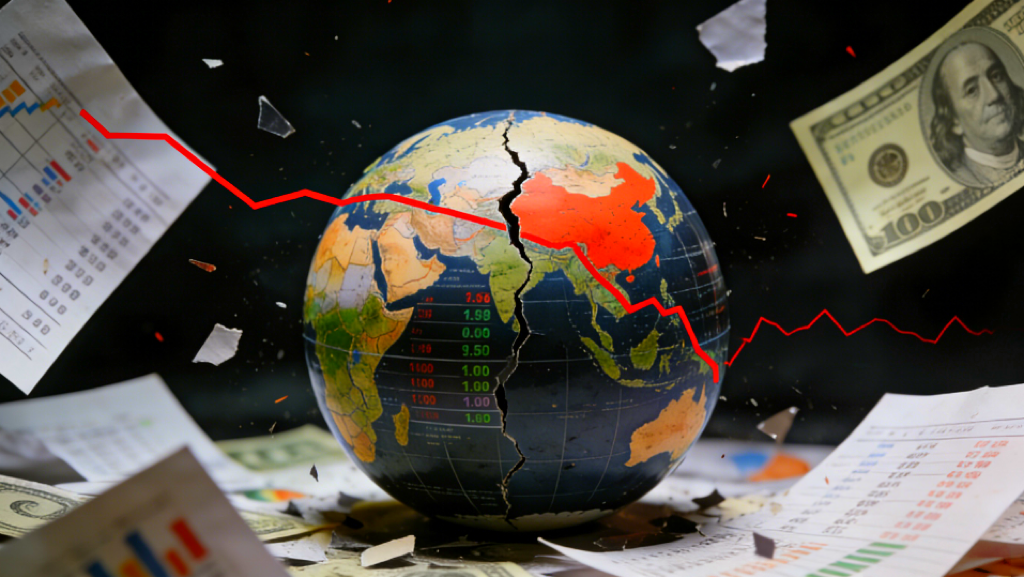
It has been reported that a fissure has emerged in the linkage between Asian stock markets and currency exchange rates, a signal that is prompting global capital to reassess its investment strategies in the region.
The 30-day correlation between the MSCI Asia Pacific Index and the Bloomberg Asia Dollar Index, which have historically moved in sync, has fallen below zero for the first time since September 2024. Across the region, many markets are exhibiting an unusual phenomenon where domestic stock prices continue to hit record highs while local currencies weaken.
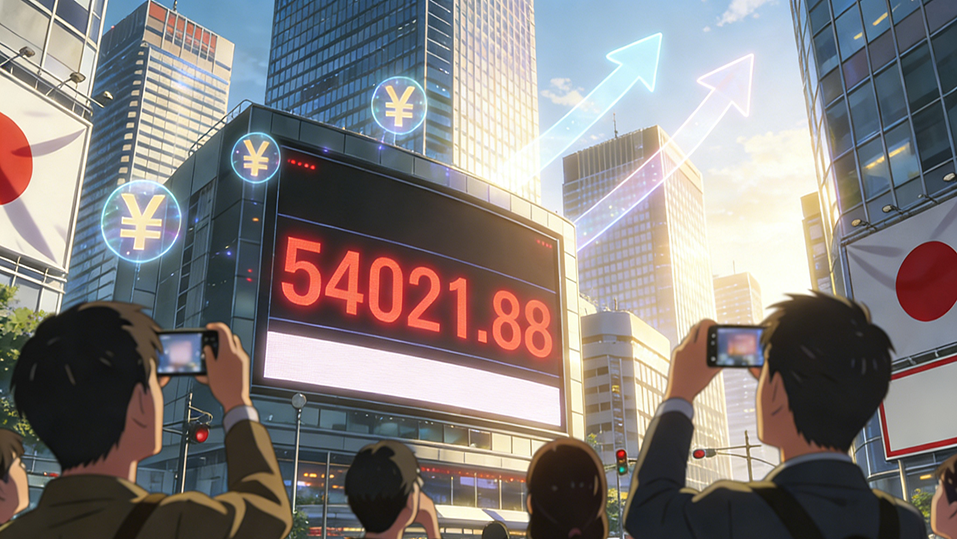
This divergence is most pronounced in South Korea. After the KOSPI surged 76% in 2025, significantly outperforming global peers, it has continued to climb in 2026, yet the Korean won has fallen to a near 17-year low this week. Similar trends are emerging in markets like Japan and Taiwan.
While it remains uncertain how long this trend will persist, one thing is clear in the short term: robust stock market performance no longer implies currency strength. This contradictory signal across asset classes is prompting investors to brace for potentially heightened volatility, with some institutions already preparing to increase hedging measures.
"This is certainly a significant surprise, particularly in South Korea," said Ian Samson, a portfolio manager at Fidelity International, which manages $1.6 billion in assets. "It's very odd, and arguably not particularly healthy, to see a country with a massive current account surplus and a booming stock market fail to see its currency strengthen alongside it."
Traders point to two independent forces driving the stock and currency markets separately: the artificial intelligence (AI) boom is propelling stock prices, while currencies are simultaneously facing capital outflow pressures. This is partly because several Asian central banks have implemented a series of interest rate cuts to shield their economies from the impact of US tariffs.
"The simplest plausible explanation is that these markets are dancing to different tunes," said Homi Lee, senior macro strategist at Lombard Odier Singapore Ltd. He believes the stock market reflects thematic and sectoral developments, while exchange rates are more influenced by capital flows and macro factors, such as the weakening market expectations for a Fed rate cut in the first half of the year. He views this stock-currency divergence as a short-term market characteristic.
Hedging Strategies
Institutions like Vantage Point Asset Management Pte and Berenberg are considering adding hedging tools to their Asian asset positions.
For investors funded in US dollars, the good news is that hedging costs are declining. According to compiled data on three-month forward implied yields, the average cost of hedging eight major Asian currencies has fallen to 0.31%, nearing its lowest level in a year.
"Equities may still have room to rise in the short term. However, the current situation likely means hedging risks sooner rather than later, and the current hedging costs are low," said Nick Ferres, Chief Investment Officer of Vantage Point Asset Management Pte, which manages a global macro fund focused on Asia from Singapore. Some institutions, however, remain relatively calm about the situation.
"While the currency perspective is important, we are not overly concerned about the mild currency pressures prevalent in the Asia-Pacific region for the equity outlook of strongly recovering export-oriented economies," noted Aninda Mitra, Head of Asia Macro and Investment Strategy at BNY Investments.
From multiple dimensions, the AI infrastructure investment boom remains the biggest variable influencing the future direction of Asian stock markets. Currently, Asian equities have had a strong start to 2026, and investors widely expect this upward momentum to continue.
"For unhedged investors, the situation is more complex," said Ulrich Urbahn, Head of Multi-Asset Strategy & Research at Berenberg, which manages €39 billion (approximately $45 billion) in assets. "Even if equities deliver positive returns, any slight weakening of the local currency against the US dollar can erode gains or increase portfolio volatility."