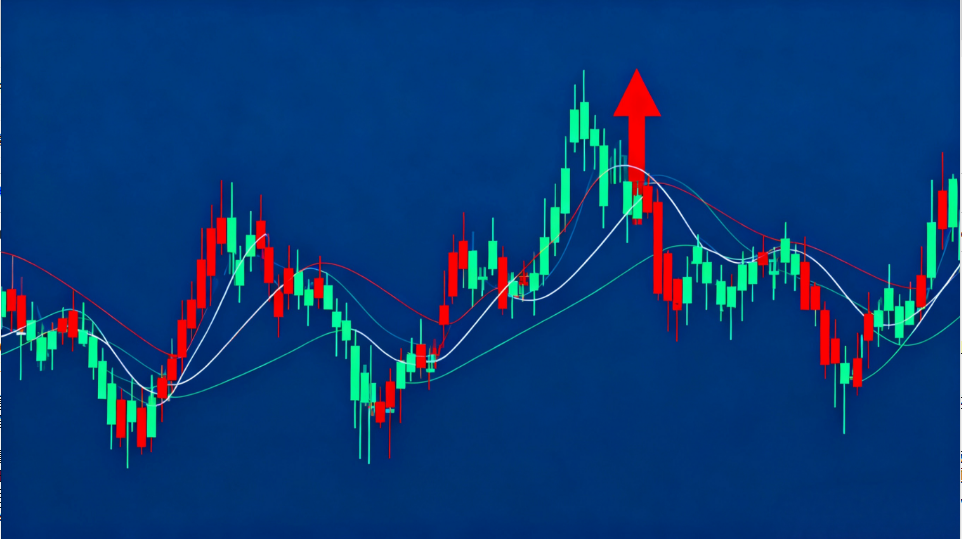






Recently, CITIC Securities released a research report pointing out that the decline in the U.S. stock market on November 20 was primarily driven by macroeconomic factors, rather than panic selling triggered by fears of an AI bubble burst, as some in the market worried. The report suggests that the current adjustment in U.S. stocks reflects the interplay between economic data and policy expectations. The market may continue its volatile pattern in the short term until the conclusion of the Federal Reserve's December FOMC meeting. During this period, funds might gradually shift towards defensive sectors to hedge against volatility arising from uncertainty.
I. Macroeconomic Factors Dominate Market Pullback; AI Sector Fundamentals Remain Solid
The recent decline in U.S. stocks mainly stemmed from the combined effect of stronger-than-expected September non-farm payroll data and hawkish signals from the Fed, triggering profit-taking by investors. Although the job market shows signs of marginal weakening, inflationary pressures and monetary policy uncertainty continue to foster a cautious market sentiment. Notably, this round of correction has not shaken the foundation of the AI sector. The report indicates that against the backdrop of exponential growth in Token demand, unresolved supply chain bottlenecks, and strong cash flows and balance sheets of the four major tech giants, the fundamentals of the AI field remain robust. An extreme scenario of an "AI bubble burst" is unlikely to materialize in the near term.
Furthermore, earnings expectations for U.S. stocks (especially tech stocks) continue to be revised upwards. The recent index pullback is more attributable to the contraction of valuation multiples rather than a substantive deterioration in corporate profitability. This characteristic further confirms the market's increased sensitivity to macro policy, rather than a loss of confidence in growth sectors.
II. Short-Term Market May Remain Volatile; Funds Shift Towards Defensive Sectors
Looking ahead over the next one to two months, CITIC Securities believes the U.S. stock market may continue to trade within a volatile range until the December FOMC meeting provides clearer guidance on the monetary policy path. This meeting will likely mark the peak of the current "hawkish panic" sentiment. Subsequently, market focus may shift to the political contest over the Trump administration's nomination for the new Fed Chair. During this process, funds are expected to tilt from high-valuation growth stocks towards defensive sectors. These include traditional defensive areas like utilities, consumer staples, and healthcare, as well as some sectors supported by both policy and favorable industry trends.
The report further notes that during periods of market volatility, investors could focus on sectors with high earnings visibility and lower sensitivity to interest rates. Additionally, after the monetary policy uncertainty subsides, the market is expected to experience a corrective rebound. This is particularly plausible as the tax reduction policy scheduled for January 2026 commences, potentially further improving the corporate profit environment and market liquidity.
III. Medium-to-Long-Term Allocation Direction: Technology and High-End Manufacturing Remain Key Themes
Despite short-term adjustment pressures, CITIC Securities maintains an optimistic view on the structural opportunities in U.S. stocks over the medium to long term. Once the new Fed Chair nomination is finalized and fiscal policy gradually gains traction, the main market narrative is likely to return to being driven by fundamentals. The report suggests investors focus on sectors such as technology, high-end manufacturing, resource materials, energy infrastructure (e.g., nuclear power), defense, internet diagnostics, and finance (banks). These areas not only benefit from industrial upgrading and policy support but also possess strong profit growth potential and anti-cyclical attributes.
It is worth mentioning that AI, as the core of the long-term technological revolution, continues to accelerate its commercialization process. Against the backdrop of gradual supply chain improvements and sustained high levels of corporate capital expenditure, AI-related sectors are expected to regain favor with investors in the future.
Conclusion
Overall, the U.S. stock market is currently in a phase influenced by multiple intertwined factors: macroeconomic data, policy expectations, and fund repositioning. While short-term volatility is difficult to avoid, the market does not lack structural opportunities. While maintaining defensive allocations, investors should closely monitor the policy signals from the December FOMC meeting and the developments regarding the nomination of the new Fed Chair, preparing for the next phase of asset rotation. Maintaining strategic flexibility amidst uncertainty is key to seizing opportunities within market fluctuations.