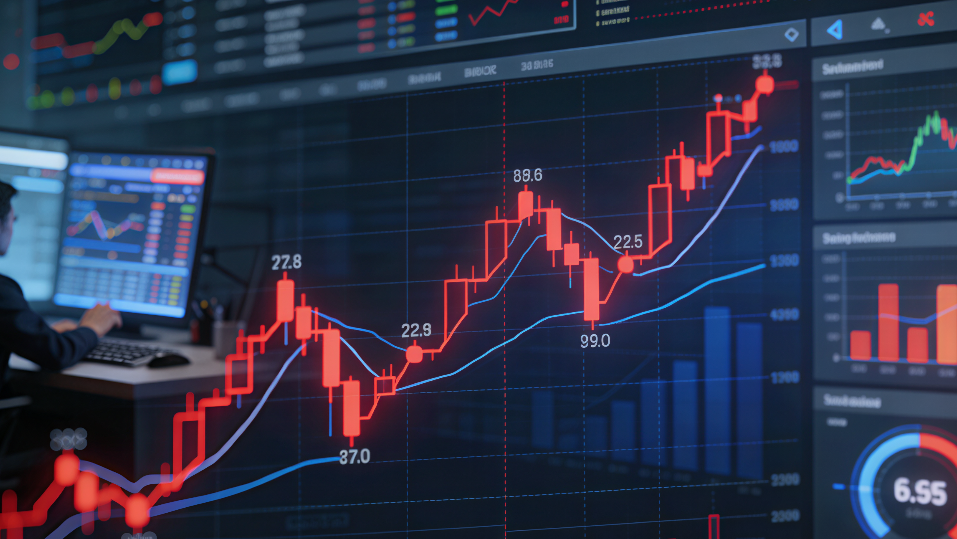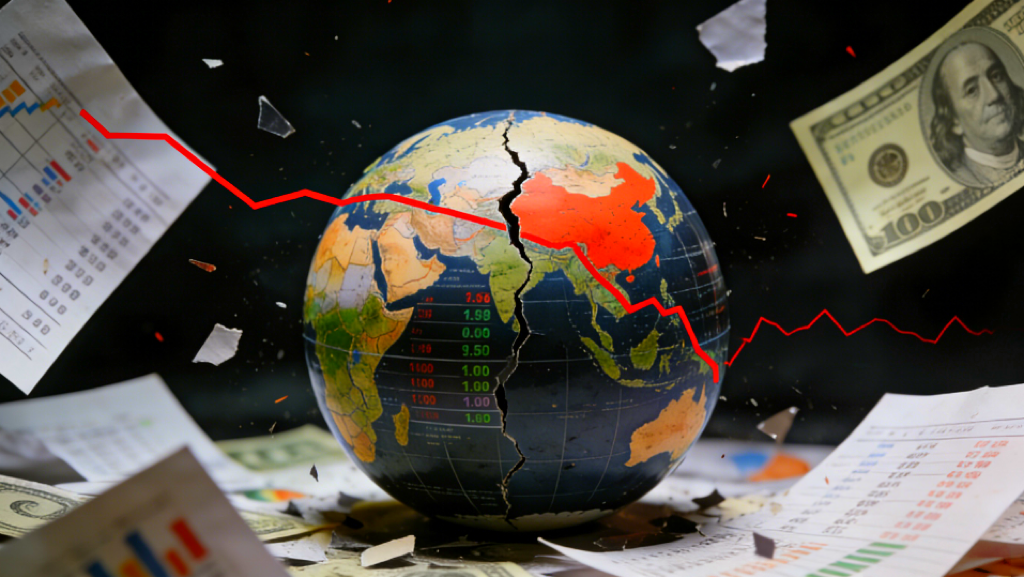






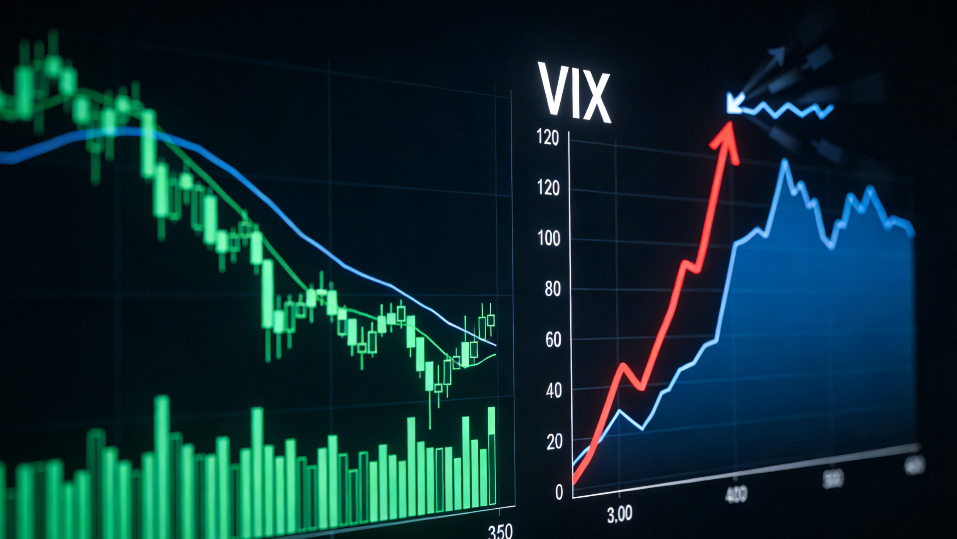
It is reported that on Tuesday, market volatility once again became the focus as investor anxiety resurfaced. The Cboe Volatility Index (VIX), a key indicator measuring the expected degree of market volatility, decisively broke through the critical threshold of 20, rising to its highest level in nearly two months, indicating a significant shift in market risk appetite. Known as the "fear index," this indicator has now risen sharply compared to the end of last week, with a cumulative increase of nearly 28%, currently hovering around 20.69, marking the end of a relatively calm period in the market since the beginning of the year.
The renewed escalation of geopolitical uncertainty is the core reason for this surge in volatility. Paul Stanley, Chief Investment Officer of Granite Bay Wealth Management, stated: "The primary risk facing the stock market is geopolitical tensions. Although the stock market has not yet significantly reacted to the geopolitical tensions that have emerged so far in 2026, these headlines serve as an important reminder that geopolitical factors can become dominant at any time. Therefore, investors should always be prepared for headline-driven volatility."
On January 17 local time, Trump announced on social media that starting February 1, he would impose an additional 10% tariff on goods imported from Denmark, Norway, Sweden, France, Germany, the United Kingdom, the Netherlands, and Finland. He also stated that the additional tariff rate would increase to 25% starting June 1 until the relevant parties reach an agreement on the U.S. "comprehensive and thorough purchase of Greenland."
On January 18 local time, the European Union convened an emergency meeting to discuss the feasibility of countermeasures. One of the proposals is to activate the Anti-Coercion Instrument. This is the EU's "trade bazooka," which can freeze market access for relevant parties into the European market and block certain investment activities. This instrument, which took effect at the end of 2023, has never been used before. French President Emmanuel Macron and the Renew Europe group in the European Parliament recently suggested using this tool to address pressure.
Another proposal is to reintroduce a tariff list, imposing additional tariffs on $930 billion worth of U.S. goods exported to the EU. It is reported that this list was shelved after the U.S. and the EU reached a trade agreement in July last year. Manfred Weber, Chairman of the European People's Party, the largest group in the European Parliament, stated that given the threats from the United States, the EU-U.S. trade agreement cannot be approved, and the zero-tariff policy towards the U.S. must be suspended.
Reports indicate that a European official said the European side plans to wait until February 1 to see if the U.S. actually imposes additional tariffs before deciding whether to implement countermeasures. Furthermore, the activation process for the Anti-Coercion Instrument is complex and lengthy, and whether it can be implemented remains questionable. Media cited informed sources as saying that the EU still prioritizes seeking a diplomatic resolution rather than initiating retaliatory measures.
On January 20 local time, Trump stated that his goal of controlling Greenland "will never change" and refused to rule out the possibility of seizing Greenland by force. Additionally, when asked by reporters whether an unfavorable ruling by the Supreme Court on tariff issues would affect U.S. security policy regarding Greenland, Trump said that if existing tariff tools are restricted, he "could use other methods," such as alternative means like a "licensing system." He emphasized that the method currently being used is the "best, strongest, fastest, simplest, and least complicated," but it is not the only option.
The controversial U.S. actions regarding Greenland have triggered diplomatic tensions and further shaken investor confidence. On Tuesday, all three major U.S. stock indices closed lower, with the Dow Jones Industrial Average falling 1.76%, the S&P 500 Index falling 2.06%, and the Nasdaq Composite Index falling 2.39%. At the same time, the U.S. dollar and Treasury yields fell sharply, with the U.S. Dollar Index dropping nearly 1% over two trading sessions.
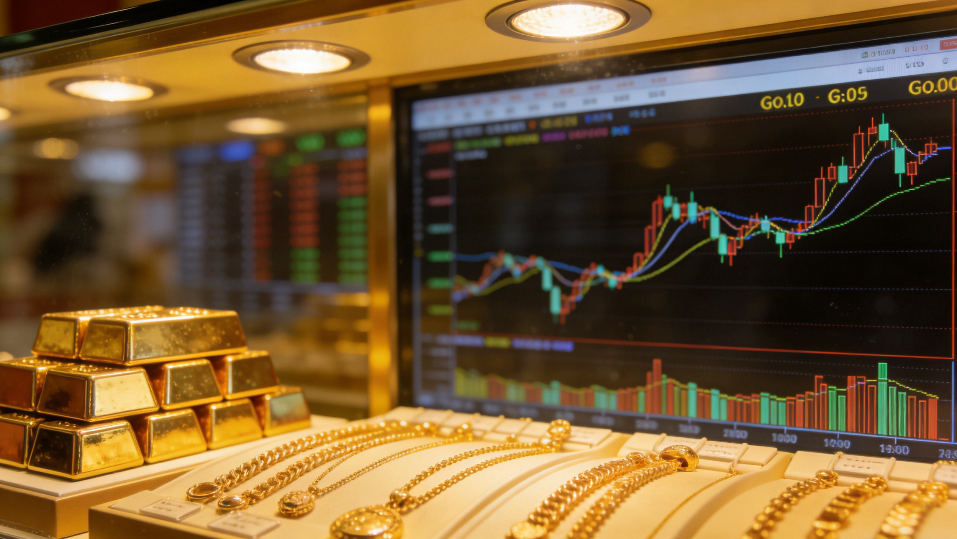
Furthermore, due to concerns that Trump is reintroducing trade risks to the global market, investors have flocked to safe-haven assets, pushing gold and silver to new highs. As of the time of writing, spot gold rose 0.4% to $4,783 per ounce; spot silver rose 0.7% to $95.28 per ounce.
Despite the clear setback in investor sentiment on Tuesday, the market is pondering whether the Greenland incident is merely a reflexive sell-off or will have a longer-term impact on the market. Jamie Cox, Managing Partner at Harris Financial Group, said he has not yet seen signs of large-scale investor withdrawal. He stated, "I am not yet willing to assert that what is happening around Greenland and the recurrence of tariff threats will trigger a stock market correction." He added that he would be surprised if the market experienced a 3% to 5% decline this week.