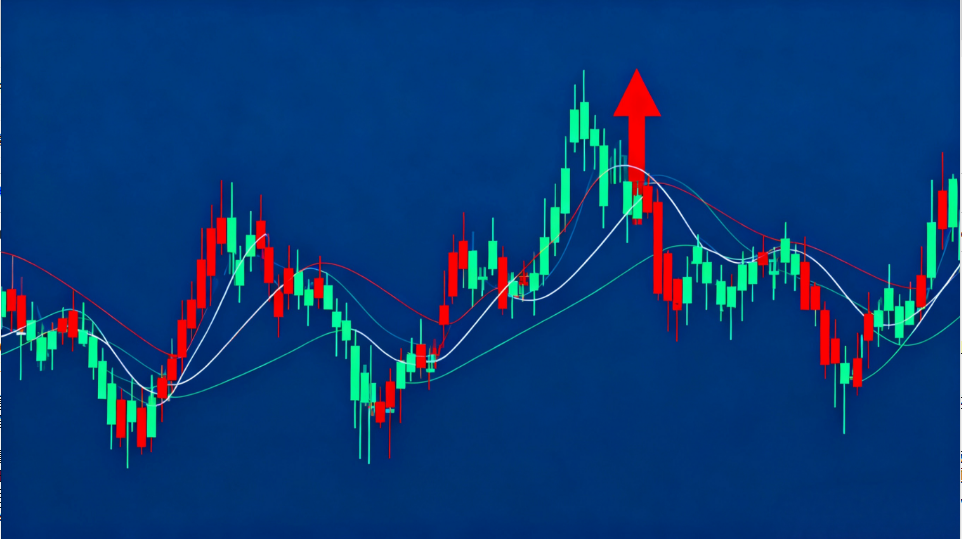







On November 22, 2025, the price of Bitcoin hovered around $83,000, down approximately 34% from its all-time high of $126,210 set on October 6, with a monthly decline exceeding 20%. During the same period, tech stock sectors like the Nasdaq 100 Index also experienced significant corrections, with AI-related stocks leading the decline in global risk assets. This round of adjustment is not an isolated event but the result of a combination of multiple factors, including the technology cycle, macro liquidity, institutional behavior, and internal community controversies. Based on the latest market data and historical patterns, this article provides a comprehensive analysis of the current correction and assesses potential future paths.
I. Technical Analysis Perspective: Extended Cycle and Breakdown of Key Support Levels
Bitcoin's price movements have long followed the four-year halving cycle规律. After the fourth halving in April 2024, this bull market started from the bottom in late 2022 and reached its peak in October 2025, lasting approximately 1095 days, which has exceeded the length of the 2021 cycle. However, the price increase has been relatively moderate (rising from a low of about $16,000 to $126,210, about 7 times, whereas the 2017 and 2021 cycles saw increases of over 20 times).
Two indicators long emphasized by renowned technical analyst Benjamin Cowen played a key role in this adjustment:
50-Week Simple Moving Average (50-week SMA)
The current 50-week SMA is approximately in the $86,000-$88,000 range. In mid-November, Bitcoin closed below this line for several consecutive weeks, the first such signal in this bull market. Historical data shows that once Bitcoin falls below the 50-week SMA during a bull market phase, it often signals the end of the bull market momentum and a transition into a bear market phase. In his latest analysis in November, Cowen pointed out that this breakdown confirms the "bull market end signal" and predicted that Bitcoin might test the 200-week SMA (currently around $60,000-$70,000) in 2026.
Cycle Length Pattern
Cowen's "Extended Cycle Theory" suggests that the duration from the low to the high in this cycle is already similar to previous cycles (around 1500 days), and the bear market phase from the high to the next low might last around 364 days. Calculating from the October 6 high, the potential bottom could occur around October 2026, with a price target in the $40,000-$60,000 range. This pattern has been highly consistent in the past three cycles, and the "extended" characteristics of this cycle (longer post-halving rise time, slower gains) further strengthen its predictive value.
Furthermore, short-term indicators like RSI and MACD show oversold conditions, and the MVRV Z-Score has dropped to around 2, indicating that valuations have returned to a reasonable range but have not yet entered extreme undervaluation. The average cost price for buyers in 2025 is approximately $103,227. Currently, most institutional investors are sitting on floating losses of 13%, which further exacerbates selling pressure.
II. Macro Liquidity Perspective: Dual Impact of Yen Carry Trade Unwinding and Fed QT Termination
Since the second half of 2025, the global liquidity environment has undergone dramatic changes, becoming a core macro driver of this correction.
Large-Scale Unwinding of Yen Carry Trade
The Bank of Japan's continuous interest rate hikes and the rise of long-term government bond yields to historical highs (the 40-year yield reaching 3.697%) have made carry trades borrowing low-interest yen to invest in high-yielding dollar assets no longer profitable. An estimated $20 trillion in yen carry positions are being forced to unwind, with funds flowing back to Japan, leading to selling pressure on dollar-denominated assets (including Bitcoin, US Treasuries, and tech stocks). Two concentrated unwinding events in August and November directly triggered flash crashes in global risk assets. Bitcoin fell over 17% in November alone, highly synchronized with the Nasdaq.
The "Bad News is Good News" of the Fed's Early QT Termination
On October 29, the Federal Reserve announced that it would end Quantitative Tightening (QT) starting December 1, no longer allowing Treasury bonds to roll off naturally and switching to full reinvestment. This decision came six months earlier than market expectations, citing that bank reserves had fallen to warning levels and signs of stress in short-term funding market rates. However, the market interpreted this as the "Fed seeing signals of financial system fragility," triggering risk-off selling in risk assets. Although the end of QT objectively stops the monthly drain of about $95 billion in liquidity, the short-term psychological impact was greater.
Declining Global Risk Appetite
The high-valuation AI sector faces profit-taking pressure, coupled with delayed expectations for Fed rate cuts (the probability of a December rate cut fell below 50%), putting general pressure on risk assets. Bitcoin, with its dual attributes of "digital gold" and "tech stock," became the first responder—the "canary in the coal mine"—with its 24/7 trading and high liquidity allowing for rapid price discovery.
III. Institutional Behavior Perspective: Record ETF Outflows and Profit-Taking by Early Holders
The US spot Bitcoin ETF was the main engine of the bull market in 2025, with cumulative net inflows exceeding $50 billion in the first 10 months. However, the situation changed drastically in November:
Monthly net outflows reached $3.79 billion, a historical record, with BlackRock's IBIT alone seeing outflows of $2.47 billion in a single month.
The peak single-day outflow exceeded $900 million, primarily driven by retail investor redemptions, while institutional investors (such as hedge funds) reduced positions more through over-the-counter channels.
JPMorgan analysis pointed out that this round of outflows is mainly driven by retail investors, rather than deleveraging by crypto-native investors. The average purchase cost in 2025 was around $90,000, and the current price has fallen below this level, triggering "stop-loss" redemptions.
Simultaneously, significant profit-taking by early holders (OGs) was observed. Bitcoin ETFs and corporate treasuries (like MicroStrategy) provided unprecedented liquidity, allowing early miners and investors from 2013-2017 to liquidate multi-billion dollar positions on a large scale for the first time without causing a crash. Jordi Visser's "Bitcoin IPO Theory" was validated in this cycle: this is a wealth transfer from the early few to the masses, a process inevitably accompanied by prolonged sideways movement or pullbacks.
IV. Internal Community Controversy: Ideological Divisions Triggered by OP_RETURN Policy Change
The Bitcoin Core v30 release (published in October 2025) removed the 80-byte limit for OP_RETURN, allowing larger arbitrary data to be stored on-chain. Although this change was only a relay policy (not a consensus rule), it caused significant division within the community:
Supporters believe it simplifies the code and supports legitimate use cases like sidechains/bridges.
Opponents (including core developers like Luke Dashjr) worry this will encourage "data spam" (images, files, etc.) on-chain, increasing node operating costs, potential legal risks, and deviating from Bitcoin's "sound money" positioning.
Although the controversy did not directly cause the price drop, it intensified the "exit" sentiment among some OG holders, reinforcing the narrative that "Bitcoin is being compromised from within," resonating with the technical breakdown and macro tightening.
V. Comprehensive Assessment and Outlook
The current correction is not due to a single factor but is the result of the叠加 of technical cycle top signals, macro liquidity tightening, institutional profit-taking, and community divisions. As the most liquid risk asset, Bitcoin was the first to reflect, and reflect excessively, the global shift towards "risk aversion."
Short-term (Before the end of 2025): Oversold indicators suggest a high probability of a rebound, potentially testing the 200-day SMA (around $104,000). However, if it cannot reclaim the 50-week SMA, any rebound would merely be a bear market rally.
Medium-term (2026): If historical patterns persist, Bitcoin might enter a year-long bear market adjustment, targeting the $40,000-$70,000 range. Analysts like Cowen believe this is the inevitable cost of an "extended cycle"—although this bull market saw significant gains, its prolonged duration and increased participation lead to an equally "extended and moderate" correction.
Long-term: Bitcoin's fundamentals remain unchanged (halving, institutional adoption, national reserve trends), limiting the downside potential. After the 2026 low, a new cycle may begin. The current extreme fear (Fear & Greed Index at 15) often indicates a phase bottom.
Investors need to be cautious: This correction has already reached a depth of 30%. Further declines will test the resolve of all buyers who entered in 2025. Diversifying risk, focusing on key levels like the 50-week/200-week SMA, and avoiding excessive leverage are the most rational strategies at present. Bitcoin's ten-year history proves that every bear market paves the way for the next bull market—but the process is always painful.