





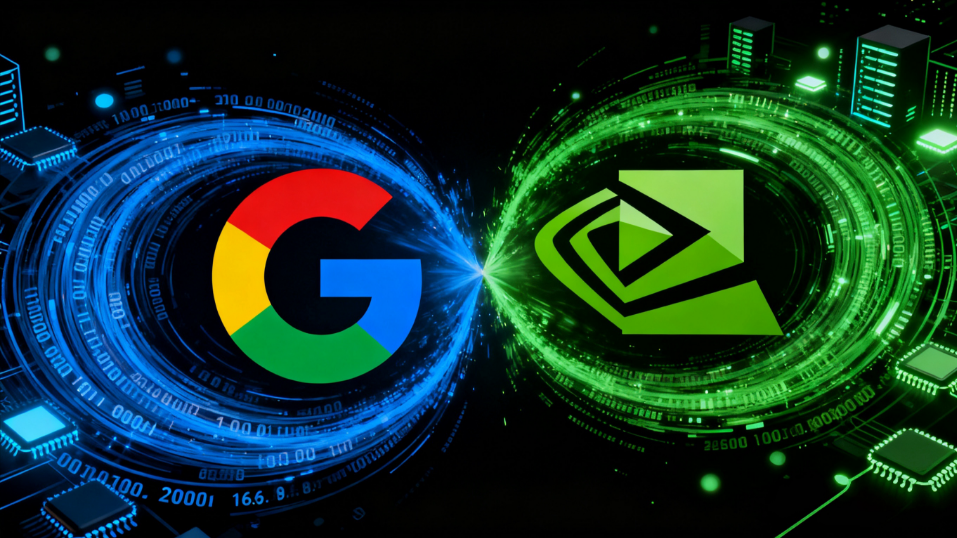
According to foreign media reports on November 25, Alphabet (GOOG.O), Google's parent company, is actively advancing the commercialization of its self-developed AI chips and has engaged in in-depth discussions with several tech companies, including Meta (META.O), regarding plans to provide access to its Tensor Processing Units (TPUs). This strategic move not only marks a critical step for Google in the AI hardware domain but also has the potential to reshape the current AI accelerator market landscape, which is predominantly led by Nvidia (NVDA.O).
For a long time, Google has primarily deployed its self-developed TPU chips within its own data centers, offering them to enterprise customers as computational power for rent via the Google Cloud Platform, rather than selling the hardware directly. However, according to an exclusive report by the U.S. tech media The Information on Monday evening local time, Google is planning to alter this traditional strategy and is considering selling TPU chips directly to customers, allowing companies like Meta to deploy and use them in their own data centers.
Specific details of this potential collaboration are gradually emerging. The report indicates that Meta is seriously considering purchasing Google TPU chips worth billions of dollars starting in 2027 to enhance the AI computing capacity of its own data centers. Additionally, Meta plans to begin renting TPU-based computing resources from Google Cloud as early as 2026. These developments suggest that Meta is working to diversify its AI infrastructure supply chain to reduce over-reliance on a single supplier. Currently, Meta's AI operations, including its large-scale model training and inference tasks, primarily depend on Nvidia's GPUs.
The news triggered a chain reaction in the capital markets upon release. The stock prices of Google and Broadcom, a close partner in its TPU chip efforts, rose in after-hours trading, reflecting market optimism about the growth potential from jointly exploring new markets in the AI chip sector. In contrast, the stock prices of Nvidia, the current leader in the AI chip market, and another major player, AMD (AMD.O), declined, indicating investor concerns that intensified competition could impact their future sales and pricing power.
For Google and Broadcom, who co-design the Tensor chips, this potential commercial cooperation signifies the opening of a promising new market. Selling chips directly, rather than just providing computing services, would create a new, sustainable revenue stream for Google and significantly enhance its influence and voice in the global AI infrastructure arena.
More importantly, this move could pose significant competitive pressure on Nvidia and AMD. Nvidia has long held a near-monopolistic position in the AI training market, leveraging its powerful GPU product line and mature CUDA software ecosystem. If Google's TPUs successfully enter the market as hardware sold directly on a large scale, it would provide a high-performance alternative. This could likely erode some of Nvidia's market share and might force adjustments in its pricing strategies, thereby profoundly impacting the competitive dynamics and future development of the entire AI hardware industry. A new transformation in the AI chip market landscape appears to be underway.